
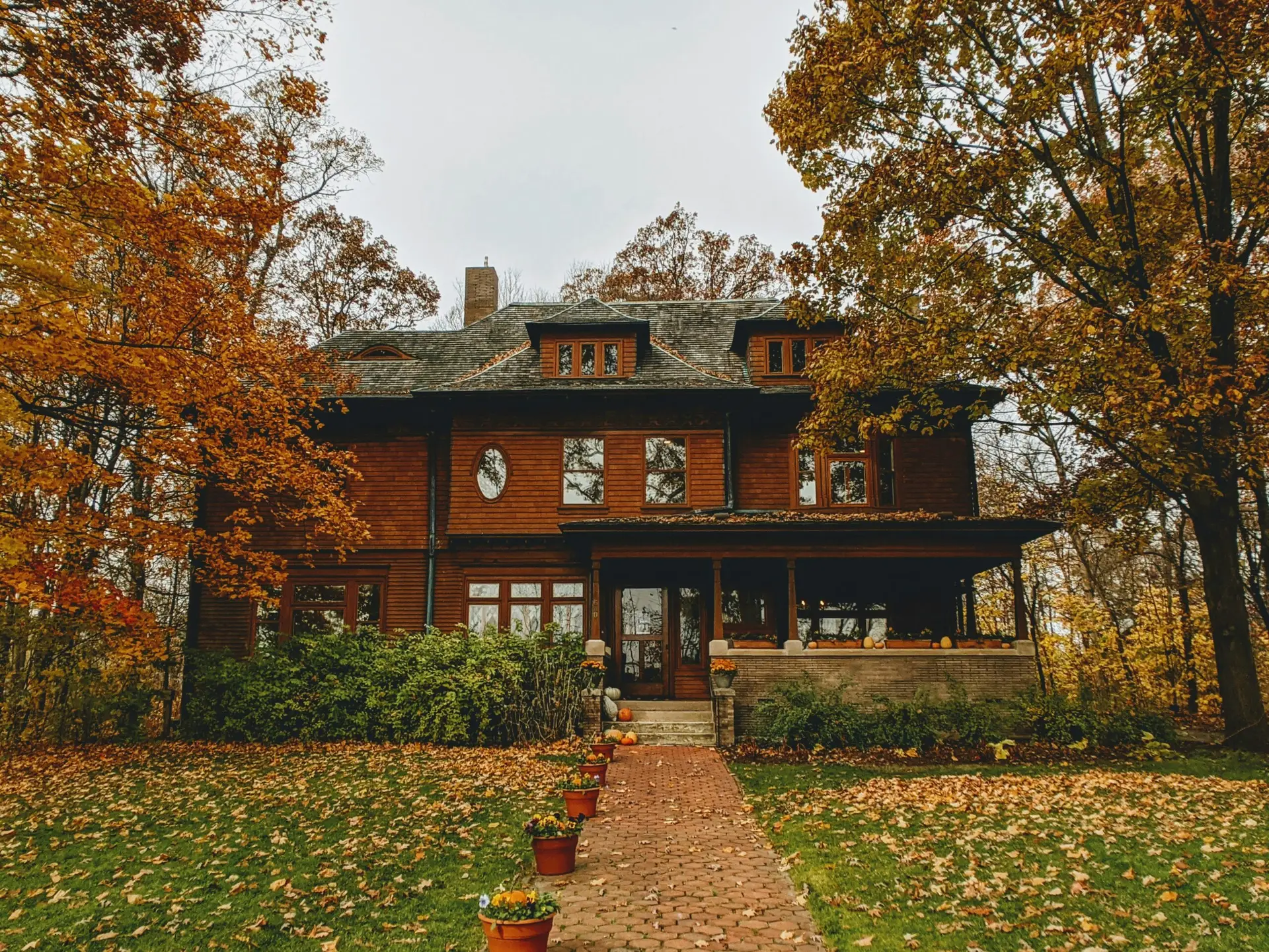
Navigating Remodeling Permits and Historic Guidelines
There is a real charm to living in Newburyport or Newbury. Federal-era homes downtown, farmhouses out toward the marshes, and coastal properties near Plum Island all carry a history you cannot build new. That history is also what makes remodeling here more involved than it would be in a newer subdivision. A kitchen project in an 18th or 19th century home runs into building codes, historic preservation questions, and, near the coast, conservation rules that many homeowners do not see coming.
The good news is that none of it has to stall your project. The homeowners who move through the process smoothly are the ones who planned early, understood which rules actually apply to their home, and worked with a contractor who has done this locally before. This guide walks through what a kitchen remodel really involves in Newburyport and Newbury, so you can plan with your eyes open.
Does a kitchen remodel need historic approval in Newburyport?
This is the first question most Newburyport homeowners ask, and the answer is usually reassuring. Most kitchen remodels are interior work, and interior changes generally do not trigger historic review. You can reconfigure your layout, replace cabinets, and update finishes without a historic board weighing in.
Where it gets more involved is the exterior. If your remodel moves a window, adds a new one for a kitchen layout, cuts in a vent, or expands the footprint, the outside of the house is now in play, and that is where your property’s status matters.
Here is the part that trips people up. Newburyport has one of the largest National Register historic districts in Massachusetts, with thousands of contributing buildings. Being listed on the National Register is an honor, but on its own it does not stop a homeowner from making privately funded changes to their own home. What does carry binding local design review is a Local Historic District, and Newburyport has just one of those, the Fruit Street district. Separately, the Newburyport Historical Commission reviews demolition under the city’s Demolition Delay Ordinance and advises on preservation questions.
So before you assume your kitchen project needs a historic sign-off, find out exactly what your property is subject to. A home inside the Fruit Street Local Historic District is treated differently than a home that is simply within the National Register district. This is one of those details worth confirming with the city, or with a contractor who already knows how to check, before you finalize a design that touches the exterior.
What building permits does a kitchen remodel require?
Whether your home is historic or not, most full kitchen remodels need permits, and pulling the right ones is not optional. Skipping a permit can stall a sale later, void insurance coverage on the work, and force you to open up finished walls for an inspection you missed.
For a typical Newburyport or Newbury kitchen, you are usually looking at:
- A building permit for structural work, removing or moving walls, and window or door changes. This is the main permit that ties the project together.
- An electrical permit, pulled by a licensed Massachusetts electrician, for new circuits, outlets, lighting, and appliance connections.
- A plumbing permit, pulled by a licensed Massachusetts plumber, for sink relocations, dishwasher lines, and any water or drain changes.
Electrical and plumbing permits are pulled by the licensed tradespeople doing that work, not by the homeowner. That is a feature, not a hurdle. It means the people responsible for code compliance are the ones signing off. Inspections happen at set points during construction, such as after rough-in and again at completion, so the schedule needs to account for them.
Newburyport and Newbury each run their own building department, and you file where the property sits. Approval times vary with the season, the department’s workload, and how complete your application is when it lands. Plan for the process to take time rather than assuming it clears in a few days, and check current timelines with the building department when you apply. A clean, complete submission with clear plans is the single best way to avoid delays. When we handle a remodel, we manage this whole piece for the homeowner, because knowing how each local department actually operates is what keeps a project on schedule. You can see how we approach kitchen work on our kitchen remodeling page.
What coastal and conservation rules apply in Newbury?
Newbury adds a layer that inland towns do not have, and it catches a lot of homeowners off guard. If your property is near wetlands, marsh, dunes, a river, or the coast, especially out toward Plum Island, your project may fall under conservation review.
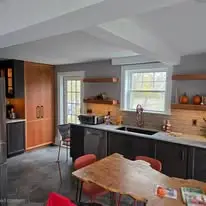
Newbury’s Conservation Commission administers the Massachusetts Wetlands Protection Act along with the town’s own Wetlands Bylaw, which gives extra protection to the Plum Island Barrier Beach and is stricter than the state law alone. Protected resource areas include wetlands, their buffer zones, and land near rivers and the coast. Work inside those areas, even something that seems routine, can require a filing with the Conservation Commission before you break ground.
For a kitchen remodel, this matters most when the project touches plumbing and waste lines, expands the structure, or disturbs ground near a protected area. If there is any chance your property is affected, the town’s own guidance is clear: contact the Conservation Agent before starting work. If wetlands are on or near your lot, the first step is having a professional flag the boundaries so everyone knows what they are working with. Getting this right early is far cheaper than a stop-work order or a restoration order after the fact. Our Newbury kitchen remodeling work is built around knowing when these rules come into play.
Why does local experience matter so much here?
You could learn all of this yourself. Plenty of homeowners try. The reason it pays to work with a contractor who has done kitchens in these specific towns is that the knowledge is local and hard-won. A contractor who has pulled permits in Newburyport recently knows the building inspectors, understands what the department wants to see in a submission, and knows when a project needs a conversation with the Conservation Commission or a check on historic status. That saves weeks and prevents the expensive surprises.
Older homes also behave in ways that catch inexperienced crews. Historic framing was not built to modern standards, walls are rarely square, and opening things up often reveals wiring, plumbing, or structural conditions that were never on any drawing. Knowing how to handle that calmly, and how to tell you about it honestly before it becomes a change order, is the difference between a stressful remodel and a smooth one.
A few questions worth asking any contractor before you hire:
- Have you pulled permits in Newburyport or Newbury recently?
- How do you handle unexpected structural issues in historic framing?
- Do you know how to check whether my property is in a local historic district or a conservation area?
The right answers tell you a lot. Our Newburyport kitchen remodeling page goes deeper on how we work in the city’s older homes.
Plan Your Newburyport or Newbury Kitchen with Clarke Building Company
Do not let permits and preservation rules keep you from the kitchen you want. With the right plan and the right local knowledge, a historic-home remodel can be smooth, compliant, and beautiful. That is the work we do every day across the North Shore.
At Clarke Building Company, Dave Clarke is your point of contact from the first conversation to the final walkthrough. We handle the permits, we know when historic or conservation review applies, and we go over every option and every cost with you before the work begins. No sales team, no handoff, and no surprises we could have seen coming. We treat your home the way we would treat our own, and we keep you in the loop the whole way through.
If you are planning a kitchen remodel in a historic Newburyport or Newbury home, we would be glad to talk it through. Reach out through our contact form and we will help you map out the process, from permits to the finished room.
